
Every pet owner eventually faces the same situation. You have travel coming up, a family commitment that takes you away from home, or a work obligation that runs longer than your pet can be left alone. The question of where your pet stays during that time carries more weight than it might appear to on the surface. It is not just a logistics question. It is a question about your pet’s safety, comfort, and health during the hours and days when you cannot be there to monitor any of it yourself.
Standard boarding facilities handle the basics. They provide a space for your pet to sleep, food at scheduled intervals, and some level of supervision during the day. What they do not provide is the medical knowledge, the clinical observation skills, or the immediate access to veterinary care that makes a genuine difference for pets with health conditions, for older animals whose status can change quickly, and for any pet where something unexpected develops during the stay.
Veterinary boarding is a fundamentally different offering. It is not standard boarding with a veterinarian nearby. It is a care environment designed and staffed by people whose professional training is in animal health, where every interaction with your pet is informed by that training, and where the response to any health concern does not involve calling a separate clinic and waiting for an appointment. This guide covers what veterinary boarding provides, who benefits most from it, and why the difference between standard and veterinary boarding matters more than most pet owners realizes until they need it.
What Veterinary Boarding Actually Means
The term boarding gets applied broadly to any facility that houses pets temporarily, which creates confusion about what distinguishes veterinary boarding from standard kennel or daycare boarding. The distinction is not cosmetic. It is structural.
Veterinary boarding is boarding provided within or directly affiliated with a veterinary practice. The staff caring for boarded pets are trained in animal health observation. A veterinarian is on, site or immediately accessible rather than being a distant emergency contact. Medical records are available and inform how each pet is cared for during their stay. Health changes that would go unnoticed in a standard boarding environment, subtle changes in appetite, changes in elimination patterns, early signs of respiratory distress, behavioural indicators of pain, are the kinds of observations that veterinary, trained staff make as a matter of professional habit.
That difference in observational capability and medical access is what makes veterinary boarding the appropriate environment for pets with health conditions, for senior animals, and for any pet whose owner wants the peace of mind that comes from knowing the people watching their animal actually know what they are looking at.
The Core Benefits of Veterinary Boarding
Medical Oversight as a Standard Feature, Not an Emergency Add, On
In standard boarding, medical oversight is reactive. Something goes visibly wrong, a staff member notices, and only then does the process of getting the animal veterinary attention begin. That process often involves phone calls, transportation, and valuable time that matters when a health issue is developing.
In veterinary boarding, medical oversight is built into the environment. The staff providing daily care are trained to observe and recognize changes in animal health. The veterinarian who would assess a health concern is already on-site. Medical records for each boarded pet are readily accessible and help guide how that animal is cared for throughout their stay. Medications are administered correctly and on schedule by professionals who understand what they are giving and why.
For pets managing chronic conditions such as diabetes requiring insulin, heart disease requiring multiple daily medications, or seizure disorders that require monitoring and rapid intervention, this level of integrated medical oversight is not a premium feature. It is a basic safety requirement that standard boarding simply cannot provide.
Immediate Response to Health Changes
Animals do not develop health problems on convenient schedules. A dog that arrives at a boarding facility healthy can develop signs of gastrointestinal distress, respiratory difficulty, or an allergic reaction at any point during the stay. In a standard boarding environment, the response to that development involves recognizing that something is wrong, contacting an owner who may be unavailable, and then navigating access to veterinary care that may not be immediately available.
In a veterinary boarding environment, the response is immediate and professional. The observation that something is wrong is made earlier because the staff is trained to notice the early signs. The assessment of what is happening is done by people with clinical training. The decision about whether and what treatment is needed is made by a veterinarian without the delay of transport and triage at a separate facility. That compressed timeline between problem development and professional response is what prevents a minor health issue from becoming a serious one.
Correct Medication Administration
A significant percentage of pets being boarded at any given time are on some form of medication, antibiotics finishing a course of treatment, chronic disease management medications, supplements, or preventive treatments. Medication administration in standard boarding facilities is handled by staff whose training may or may not include competency in identifying medication administration errors, recognizing adverse reactions, or understanding why timing and dosing precision matters for specific medications.
Boarding veterinary facilities administer medications as a clinical function. Staff understand the medications being given, the conditions being managed, and the signs that indicate a medication is not being tolerated or is not achieving its intended effect. For pet owners whose animals are on critical medications, this distinction is the difference between a boarding stay that maintains the therapeutic management of their pet’s condition and one that interrupts it.
Appropriate Care for Senior Pets
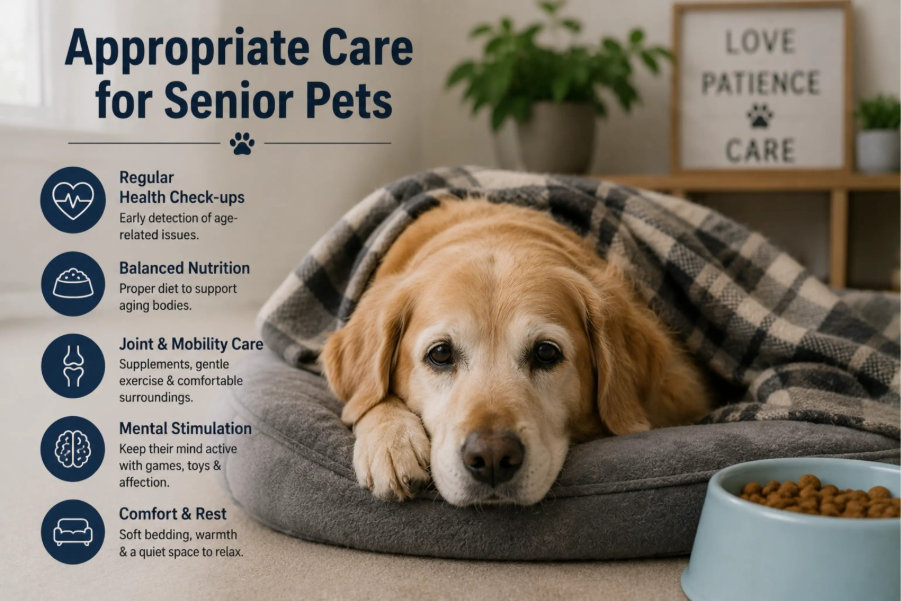
Senior pets have specific needs that standard boarding environments are not designed to address. Older animals are more sensitive to environmental stress, more prone to developing health issues during periods of disruption to their normal routine, and more likely to have underlying conditions that require monitoring. A senior dog that is doing well at home in a familiar, stable environment can decompensate during a boarding stay in ways that are not immediately visible to staff who are not trained to observe the subtle indicators.
Veterinary boarding provides the observation depth that senior pets need. Staff who are trained in geriatric animal care recognize the early signs of cognitive change, arthritis, related discomfort, and the appetite and elimination changes that signal something developing in an older animal. The proximity of veterinary assessment means that a concern identified during observation can be evaluated the same day rather than waiting until the owner returns.
Stress Reduction Through Professional Handling
Boarding is inherently stressful for many pets. The departure of their owner, the unfamiliar environment, the sounds and smells of other animals, and the disruption of their normal routine all activate stress responses that affect behaviour, appetite, and in animals with compromised health, their physical condition. How boarding staff handle animals during that stress response matters significantly to how quickly the pet settles and how well they cope with the stay.
Staff in veterinary boarding facilities are trained in low, stress handling techniques that reduce the fear and anxiety responses common in boarding environments. The ability to recognize when an animal’s stress response is crossing from normal adjustment into a level that requires intervention, and to respond to that crossing point appropriately, is a clinical skill that distinguishes veterinary, trained staff from standard kennel staff.
Who Benefits Most from Veterinary Boarding
Veterinary boarding is the appropriate choice for a broader range of pets than most owners initially consider. Understanding who benefits most clarifies whether the additional investment over standard boarding is the right decision for your specific animal.
Pets With Chronic Health Conditions
Any pet managing a chronic health condition belongs in a veterinary boarding environment rather than a standard one. Diabetes, heart disease, kidney disease, Cushing’s disease, Addison’s disease, hypothyroidism, and epilepsy are conditions where management continuity matters and where deviations from the established care protocol can have rapid and serious consequences. The veterinary staff who oversee boarding veterinary care understand these conditions, understand the medications managing them, and understand what changes in the patient’s presentation need immediate attention.
Pets Recovering from Surgery or Illness
An animal recovering from a surgical procedure or a serious illness requires more careful observation and more precise care than a healthy animal. Incision monitoring, restricted activity, wound care, and the administration of post, operative medications on a precise schedule are all components of post, surgical care that veterinary boarding handles as a medical function. Placing a recently operated pet in a standard boarding environment introduces risks that are entirely avoidable.
Senior Pets
As discussed above, senior animals have specific needs and specific vulnerabilities that make veterinary boarding the appropriate environment for their care during their owner’s absence. The investment in proper senior boarding is a small fraction of the cost of the veterinary care required when a boarding stay in an inappropriate environment trigger or fails to catch a developing health problem.
Pets With Behavioural or Anxiety Challenges
Animals with significant anxiety or behavioural challenges related to separation, unfamiliar environments, or other animals require handlers who understand those challenges and know how to manage them. Staff at veterinary boarding facilities have the training to recognize anxiety in its various expressions, to implement management strategies that reduce the animal’s distress, and to make appropriate decisions about when pharmaceutical support for anxiety is warranted and should be discussed with the veterinarian on site.
Any Pet Whose Owner Wants Medical Oversight
The peace of mind that comes from knowing your healthy pet is being cared for by people who would notice and respond to any health change is a legitimate reason to choose veterinary boarding independent of any specific medical condition. Pets develop unexpected health issues. The question is whether those issues are identified and addressed quickly by qualified people or whether they develop for hours or days before the right person notices and acts.
What to Look for in a Veterinary Boarding Facility
The quality of veterinary boarding dog boarding varies as widely as the quality of veterinary practices generally. These are the factors that distinguish a facility that genuinely delivers on the promise of medically supervised boarding from one that uses veterinary proximity as a marketing point without the substance behind it.
On, Site Veterinary Presence
The defining feature of genuine veterinary boarding is that veterinary oversight is immediate and on, site rather than available by phone or through a nearby practice. Confirm that a veterinarian is present during the facility’s operating hours and that after, hours emergencies have a defined response protocol that involves veterinary assessment rather than a call to an emergency clinic.
Medical Record Integration
A boarding veterinary facility that asks for your pet’s medical history and uses it to inform how your pet is cared for during the stay is one that takes the medical oversight component of their service seriously. Facilities that collect medical records as an administrative formality without integrating them into the care plan are not using the information that makes veterinary boarding different from standard boarding.
Transparent Communication with Owners
Knowing how your pet is doing during the boarding stay is a reasonable expectation. A veterinary boarding facility that provides updates, communicates any health observations promptly, and contacts owners when something warrants attention demonstrates the kind of transparency that builds the trust a good boarding relationship requires. Facilities that offer regular photo or video updates give owners the reassurance that comes from seeing their pet rather than relying entirely on verbal reports.
Clean, well, Maintained Facilities
The physical environment of a boarding facility directly affects the health of the animals in it. Infectious diseases spread rapidly in environments where cleaning and disinfection protocols are inadequate. A veterinary boarding facility should be visibly clean, should have cleaning protocols that are enforced consistently, and should have clear policies about the vaccination requirements that all boarded animals must meet to protect the population in the facility.
Individualized Care Protocols
A facility that cares for each animal according to the specific needs of that animal , the diet they are used to, the exercise they need, the handling approach they respond to, the medications they require , is one that treats boarding as a care responsibility rather than a containment function. Ask specifically about how individual care needs are documented and communicated to the staff members who interact with your pet during the stay.
Why Texas Wellness Centre Is the Veterinary Boarding Option Worth Choosing
Finding the right veterinary boarding for your pet when you need to travel or be away from home takes more consideration than most pet owners give it until they have experienced the difference between standard boarding and genuinely medically supervised care. Texas Wellness Centre simplifies that decision by offering pet boarding within a full, service veterinary practice where the staff caring for your pet are the same professionals who understand animal health at a clinical level.
Whether your pet is a healthy young animal whose owner simply wants the peace of mind that comes from boarding veterinary care, a senior pet whose age makes medical oversight during boarding a genuine safety consideration, or a pet managing a chronic condition where medication administration and health monitoring need to be handled by people who know what they are doing, Texas Wellness Centre provides the level of care that makes leaving your pet genuinely stress, free for both of you.
Their approach to veterinary boarding integrates medical record review, individualized care protocols, correct medication administration, and the clinical observation skills of veterinary, trained staff into a boarding experience that standard facilities simply cannot replicate. You get honest communication about how your pet is doing, prompt contact if anything warrants your attention, and the confidence that comes from knowing your animal is being watched by people who know what to watch for.
For pet owners who have settled for standard boarding because they did not know veterinary boarding was available, or who have had experiences with standard boarding that left them uncertain about their pet’s wellbeing during the stay, Texas Wellness Centre is the starting point worth finding before your next trip.
Final Thought
Veterinary boarding is not a luxury tier of standard boarding with a higher price tag. It is a fundamentally different care environment built around the same professional competency that makes veterinary medicine valuable, the ability to observe, assess, and respond to animal health with training and clinical judgment rather than good intentions and a phone number to call in an emergency.
The pets that benefit from that environment are not limited to the ones with obvious medical needs. They include every pet whose owner values the knowledge that the people watching their animal during their absence know what they are looking at and what to do when something changes.
Dog boarding in a veterinary setting, boarding veterinary care for cats and other animals, and the integrated medical oversight that comes with it represent the standard that every boarding experience should aspire to. The difference between that standard and standard boarding is most visible in the situations you hope never arise , the health change that happens at 2 AM, the medication that needs to be given at a precise interval, the subtle behavioural shift that signals something developing beneath the surface.
That difference is the reason veterinary boarding exists and the reason it is worth choosing for an animal whose health and comfort matter to you.
Leave knowing your pet is in the best possible hands.
Book Your Pet’s Boarding Stay at Texas Wellness Centre → txwellness.com